

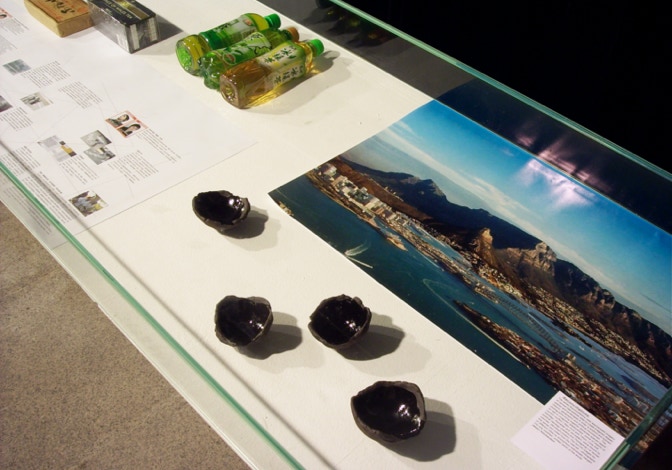
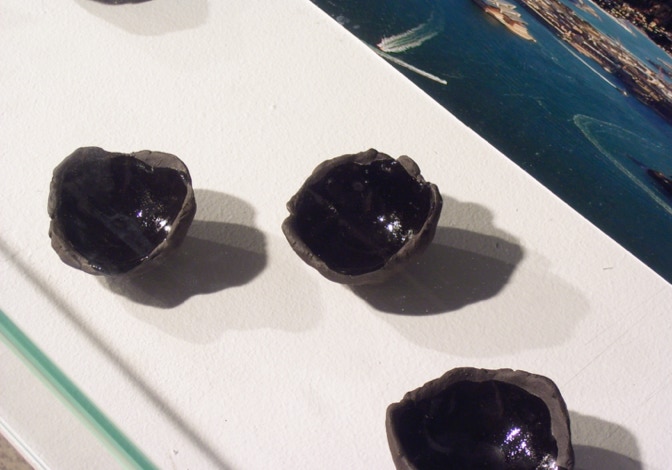
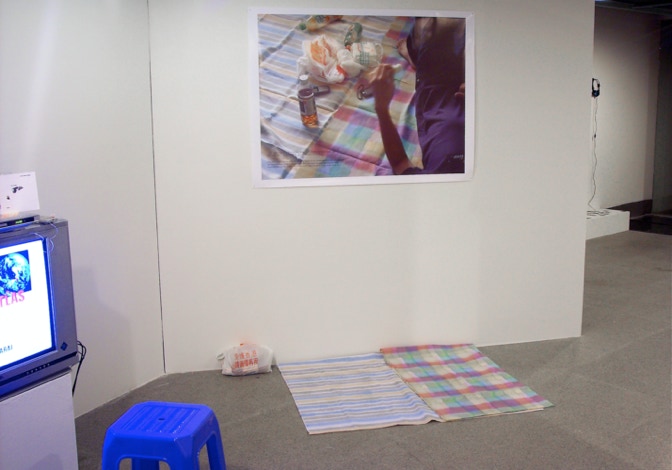
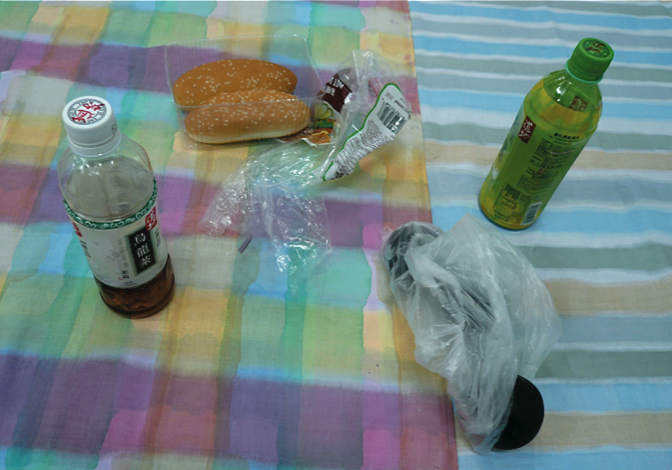

Tea Pavilion Overview (showcase)
Visitors I, II
Pablo Wendel (Germany) I, II
Pablo Wendel (Germany) / Mayling To (UK)
Mayling To (UK) / Åsa Sonjasdotter (Sweden)
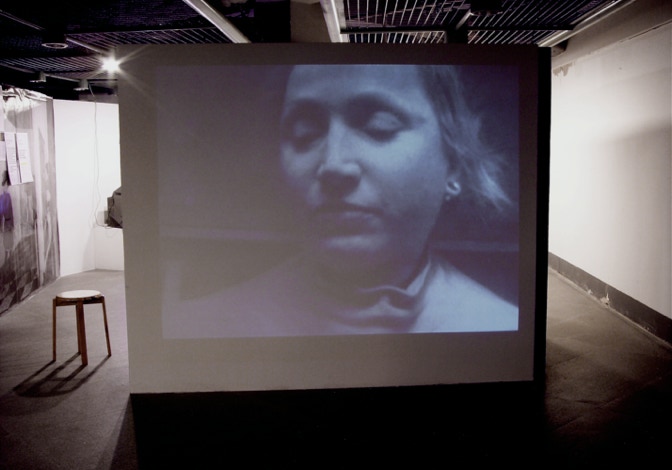
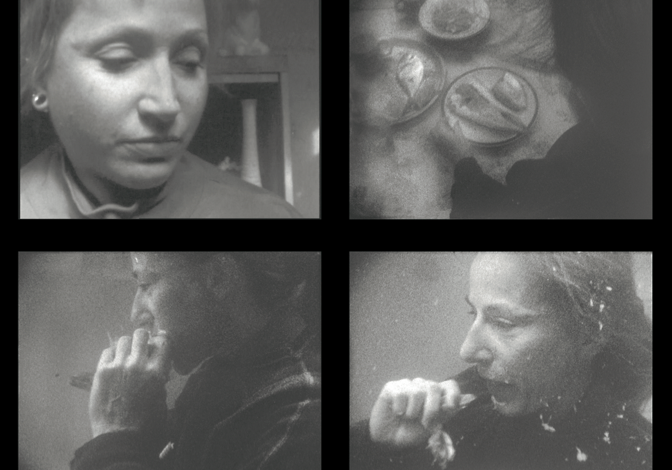
Åsa Sonjasdotter (Sweden) / Reynold Reynolds (USA) & Patrick Jolley (IR)
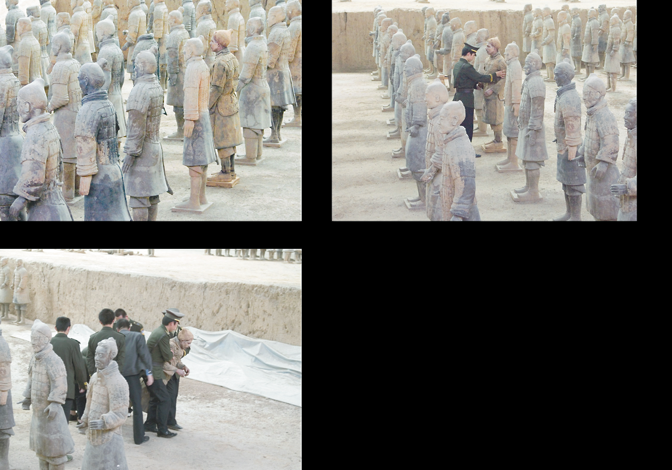
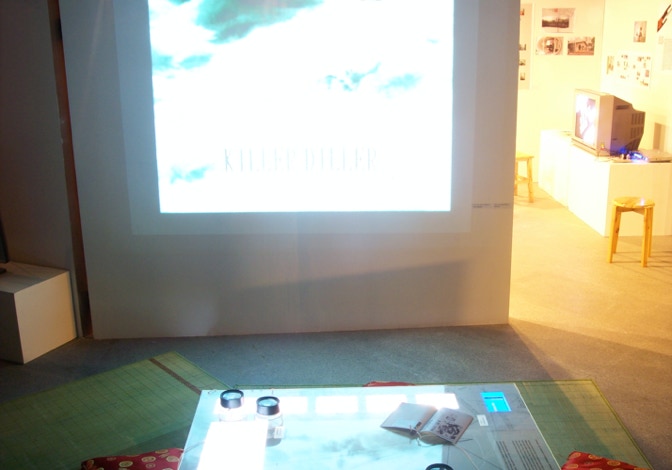
Reynold Reynolds (USA) & Patrick Jolley (IR) I, II
Tea I, II
Oda Projesi (Turkey)
Dreams of Art Spaces Collected, Moira Zoitl, Andreas Schmid, Dorothee Albrecht (Germany)
Giancarlo Pazzanese (Chile)
Visitors
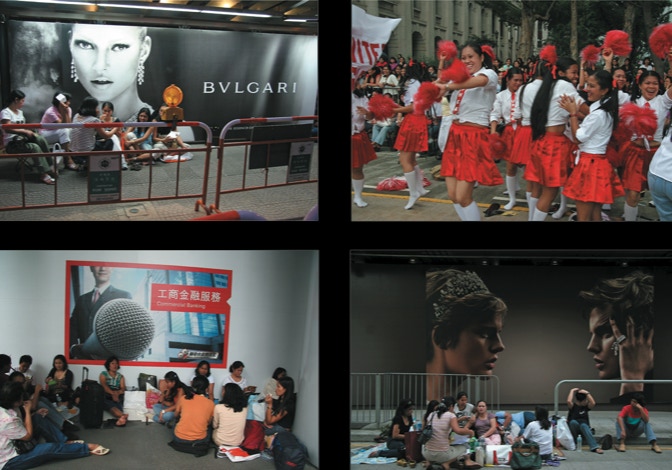
Showcase: Elke Marhöfer (Germany) / Jaishri Abichandani (India/ USA)
Elke Marhöfer (Germany)
Lee Kit (China) & Vitamin Creative Space (China) I, II
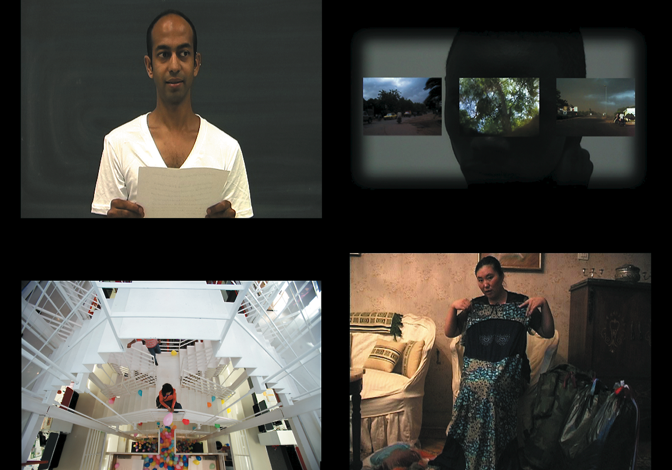
Video Atlas, Dorothee Albrecht (Germany)
Thomas Locher (Germany)
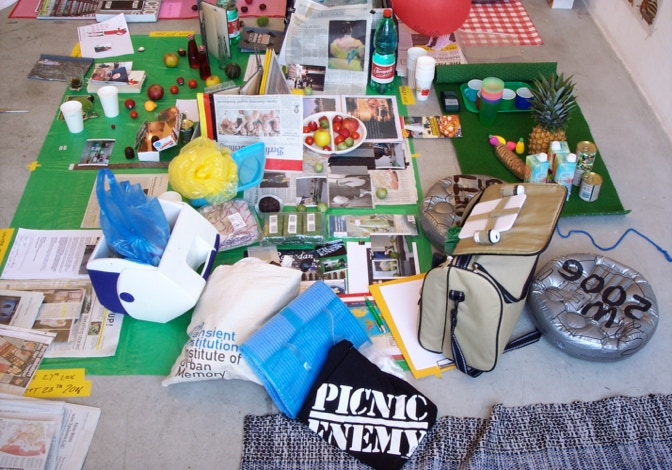
UNWETTER, Discursive Picnic (Transnational artistic group project)
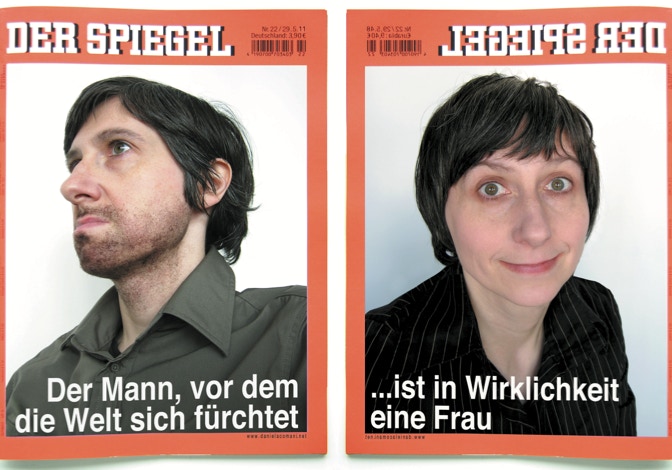
Daniela Comani (Italy)
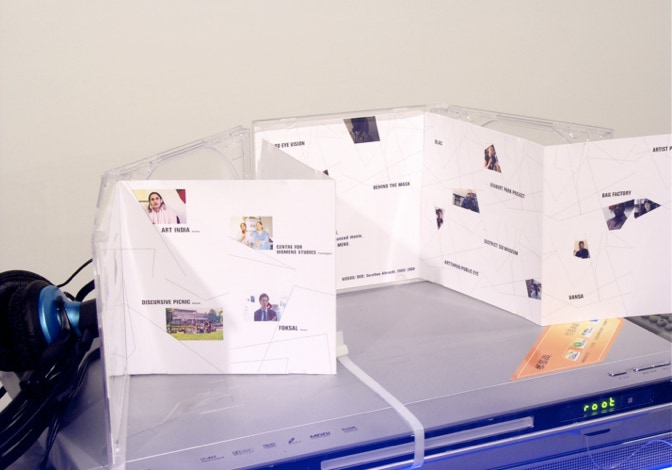
East-South, Out of Sight - Sopawan Boonnimitra & Viraporn Kitikunkamjorn
Corazon Amaya-Canete (Philippines) & Moira Zoitl (Austria)
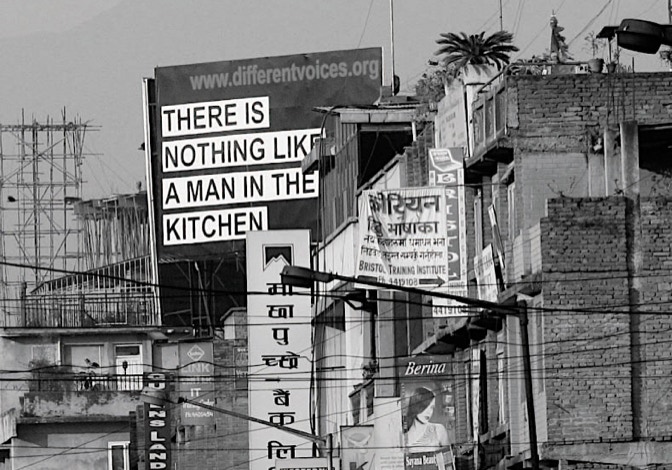
Different Voices (Nepal/Denmark/Sweden)
Africa: Personal Poetics - Stina Edblom (Sweden)
INTRODUCTION
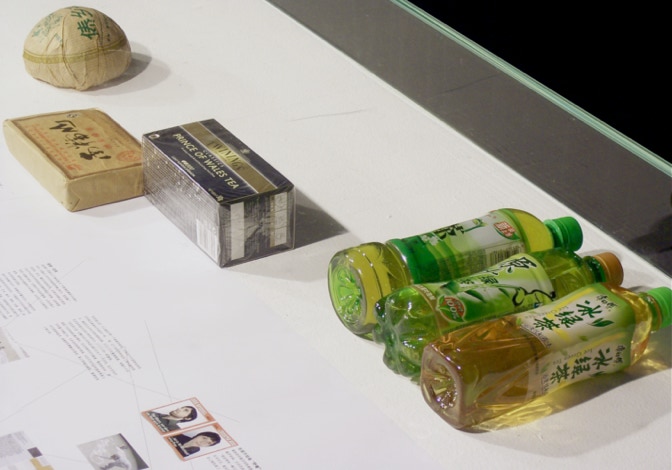
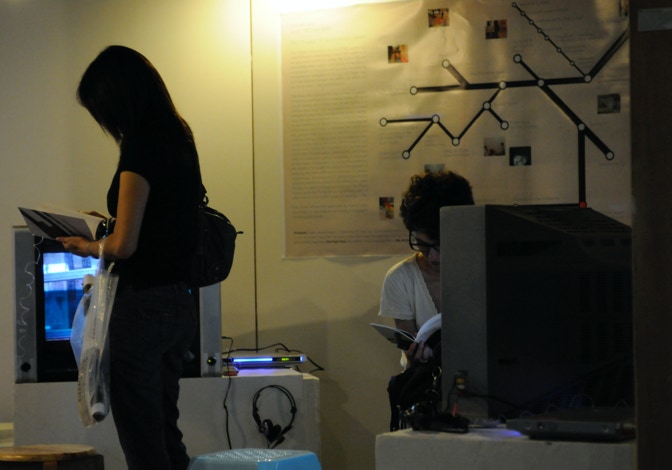
THE TEA PAVILION can be used as an area of investigation. Similar to the very different connected layers of the pavilion space itself, the subject “tea” refers to very diverse aspects, moments and practices in colonial history, highly cultivated, thousand year old ceremonies and mundane moments of simple relaxation with a nice cup of tea.
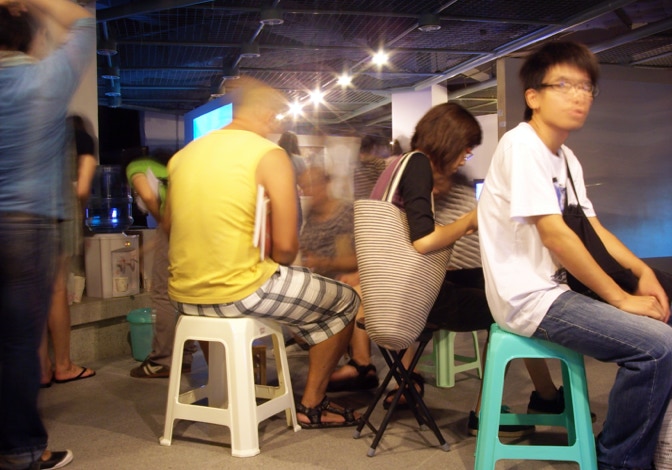
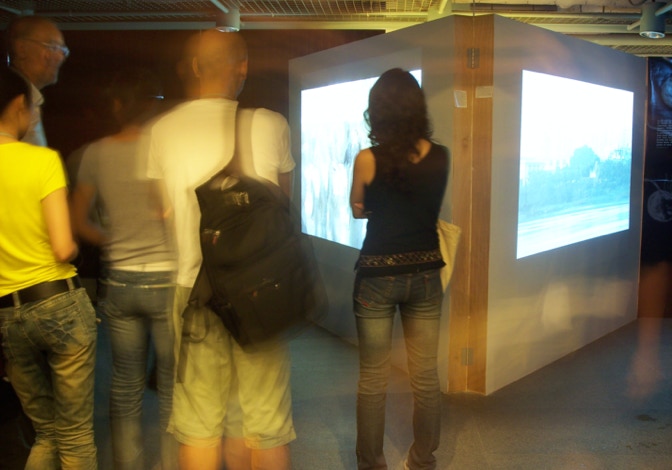
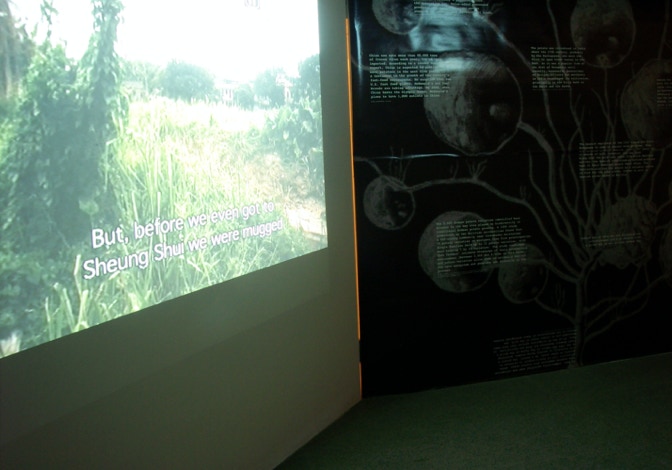
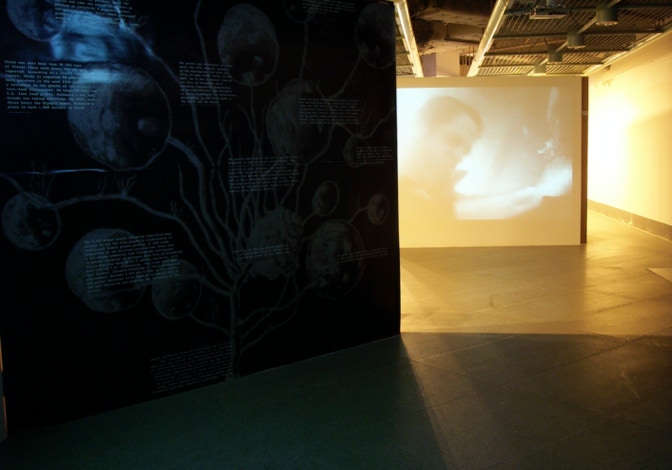
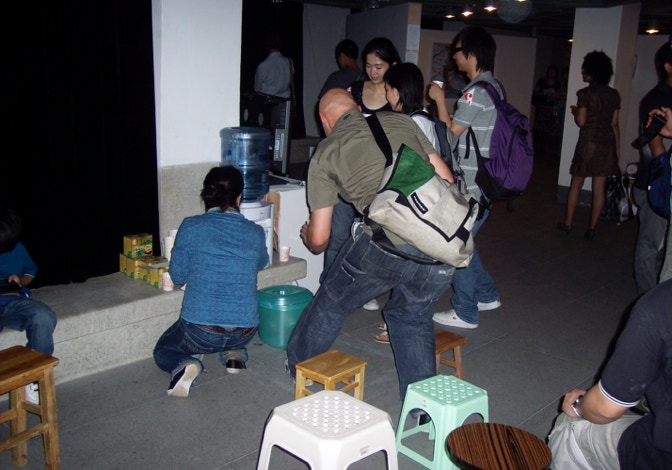
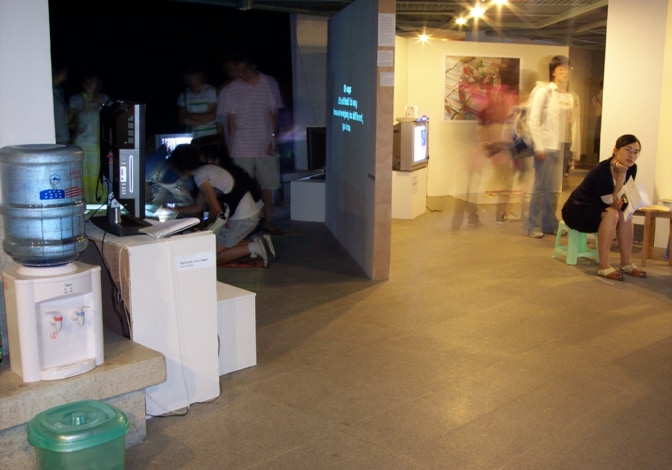
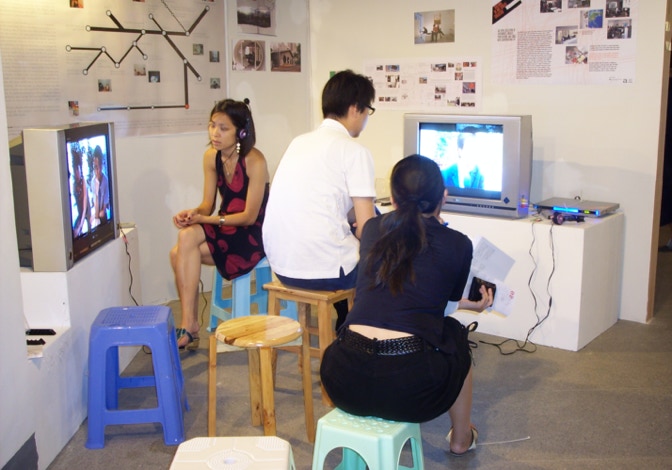
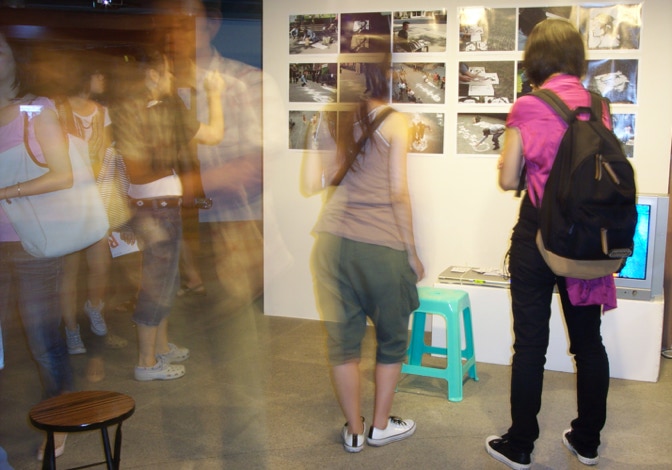
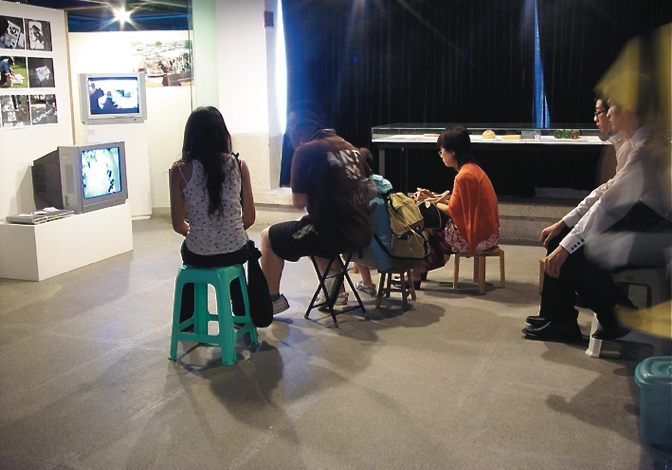
THE TEA PAVILION unfolds in a space between flexible architectural elements, which host material collections as connections to other theoretical, imaginative, historical and geographical fields, art works and seductive interfaces, like the offer of complimentary tea and comfortable furniture that invites one to rest.
As an analogy with Hannah Arendt's ideas about public space, THE TEA PAVILION relies on the simultaneous presence of innumerable perspectives and aspects for which no common measurement or denominator can ever be devised. "For though the common world is the common meeting ground of all, those who are present have different locations in it, and the location of one can no more coincide with the location of another than the location of two objects. Being seen and being heard by others derive their significance from the fact that everybody sees and hears from a different position."1
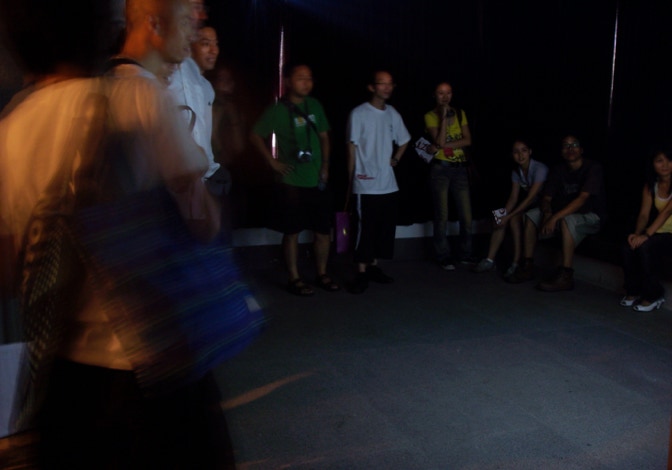
THE TEA PAVILION could be a space, a place, a frame for art, for discussions, lectures, actions, screenings and an exhibition that extends and changes constantly. The relational frame could be stretched from Guangzhou, as an immediate environment, to projects in different parts of the world.
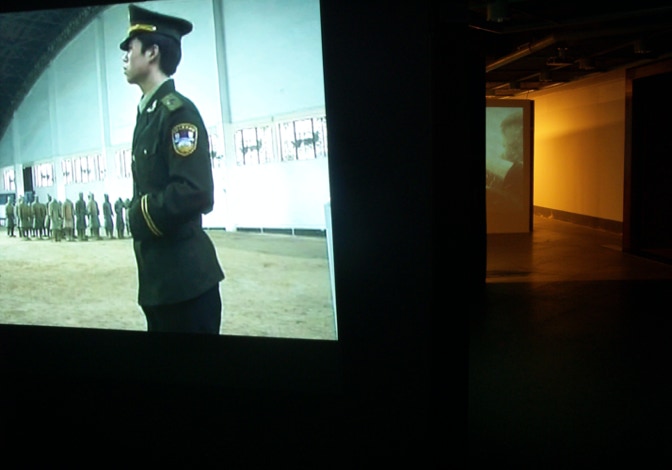
It will be made out of used material found in Guangzhou and simple architectural constructions. The flexible walls are able to react to the needs of each artistic work or project. The pavilion includes multifarious approaches, large formats, video presentations and collections
of small objects.
[1] Hannah Arendt, Vita Activa, Piper München Zürich, 1981, p. 71.
THE TEA PAVILION
A movable installation functioning like a memory
under construction
While the slogan, “Another world is possible” often appears during demonstrations held by critics of globalization, as a kind of utopian catchall; there are concrete sites of research on other worldwide relations, hierarchies and spaces. The Guangzhou Triennial 2008 (GT 2008), as an exhibition, but also the connected workshops, symposia and panels, open up such spaces. The title of the Triennial “Farewell to Post-Colonialism” speaks not for a dismissal, but rather for a renewed reflection on post-colonial conceptions, a reading that goes against the grain. Perhaps we could take it as a farewell to thinking in the post-colonial binary oppositions that we have been mired in over the years.
Inviting five Research Curators from different parts of the world could be conceived as one strategy of GT 2008 to confound traditional hierarchies. Already, if you compare the set-up of GT 2008 to other biennials or triennials, there are enormous differences. In the logic of rationalisation and efficiency enhancement, it must be seen as an amazing idea, to extend the curatorial board with an additional five curators living in different corners of the globe. They are invited to bring in their own curatorial cosmos, each working with a group of ten artists. Being one of the invited Research Curators, I can affirm the challenge of this exciting enterprise from an insider's perspective. How narrow other attempts of biennials seem in contrast, where usually two curators select 40 artists and present their work in an exhibition.
What a great opportunity it is, to spend five days together, on the bottom of the Huangshan Mountain1 - with around forty participants - artists, curators, the director and guests, as well as the creative productions themselves, all leading to discussions about the presentation of artistic projects as a platform for developing the Triennial into a space that will unfold within the context of the differing approaches of the artists. Aiming to avoid the restrictions of a fixed conceptual frame and a rigidly top down model with conspicuous hierarchies, the participants have treated the development of GT 2008 as an open-ended process. After three very intense days with presentations by the artists and curators, the group tour on the Huangshan Mountain could be seen as an attempt to approach heightened wisdom on a mountaintop and simultaneously, a strategy for facilitating creative performance.
It was as if the question “How to go beyond post-colonial dead-ends?” was internalized during the workshop. Perhaps while wandering on the mountain, subliminally, an abundance of nerve impulses and brainwaves occurred in the frontal lobe of the brains of the participants reworking the question. Could we have a vision of the rhizomatic extensions of active connections of neurons? And could we see them together with the rhizomatic connectedness of the workshop participants as a social group?
Édouard Glissant writes in Poetics of Relation: Gilles Deleuze and Felix Guattari “propose the rhizome, an enmeshed root system, a network spreading either in the ground or in the air, with no predatory rootstock taking over permanently. The notion of the rhizome maintains, therefore, the idea of rootedness but challenges that of totalitarian root. Rhizomatic thought is the principle behind what I call the Poetics of Relation, in which each and every identity is extended through a relationship with the Other.
These authors extol nomadism, which supposedly liberates Being, in contrast, perhaps, to a settled way of life, with its law based upon the intolerant root.”2
Glissant objects: “But is the nomad not overdetermined by the conditions of his existence? Rather than the enjoyment of freedom, is nomadism not a form of obedience to contingencies that are restrictive?”3
Later in his book he suggests focusing on the term 'Relation': “The reality of archipelagos in the Caribbean or the Pacific provides a natural illustration of the thought of Relation. - What took place in the Caribbean, which could be summed up in the word creolization, approximates the idea of Relation for us as nearly as possible. It is not merely an encounter, a shock (in Segalen's sense), a métissage, but a new and original dimension allowing each person to be there and elsewhere, rooted and open, lost in the mountains and free beneath the sea, in harmony and in errantry. - If we posit métissage as, generally speaking, the meeting and synthesis of two differences, creolization seems to be a limitless métissage, its elements diffracted and its consequences unforeseeable.”4
It seems to be significant that the term 'relation' isn't listed in the Routledge Key Guide or Reader: 'Post-Colonial Studies'. For the participants it could become significant to consider GT 2008 as a relational field that is about to be developed. Not only as a social space, GT 2008 opens up a contact zone, an area under investigation for possible relations or connected spaces, which are assembled of different attitudes, different forms, ideas, viewpoints...
Following and expanding Glissant, we could speak of the different relations or connected spaces, for example:
a. Relations or connected spaces that are made of shared knowledge and shared experience.
b. Relations or connected spaces facing the experience of the abyss.
c. Relations or connected spaces consisting out of very different spaces or identities with common denominators.
d. …
These examples don't have to be mutually exclusive. They can also define relations or spaces simultaneously.
Concerning: a. - The artists and curators work at the same time on different parts of GT 2008, but they work at the same Third Guangzhou Triennial. They work out of different motivations, bring in different contributions, different points of views.“Driving in the neutral gear.“5 There is no master plan. Nobody will anticipate how the project will be composed. Being attentive - there are no hard and fast rules - watching how GT 2008 will emerge.
Concerning: b. - Global warming with related storms, floods, droughts… produce one question: How to survive on this planet? - We are sitting in the same global boat.
Concerning: c. - If we take ourselves as networked identities, in a way, we are all similar as assembled identities with manifold sides and layers of cultural influences. But sometimes we are touched to the quick - in different moments - in different ways. Every one of us has their own weak points.
Using myself as a test object, during the workshop at the Huangshan Mountain, I realized that taking Hitler as an incarnation of German identity struck me like a punch to the midriff, touching the trauma that was internalized since childhood. The body reacts faster then the brain works. Psychological rationalization starts after that.
Touched - I imagine that similar bodily reaction occur for others when memories of slavery, colonialism, racism, Nazism, suppression of women, oppression of minorities, heteronomy… are brought to mind.
Enduring painful moments - then continuing the work - or taking a break and then continuing the common work.
As the Triennial functions more like a bewilderingly complex organism with all the participants and events not discernable in their broadly diverse expanse, smaller components are needed to provide a connected space that can be approached from different angles.
THE TEA PAVILION is an ambivalent space that embraces a variety of contradictory impulses. The modus operandi is a constant thinking and rethinking, thinking and doing6 and redoing. 'Oscillating Truth Production' is another never-ending mode of research. You will never reach a definitive truth, because if your stance changes just a bit, if you see it from a different perspective, the truth appears differently. It's sometimes difficult to tolerate but it presents a possibility to get away from rather narrow ideologies or explanatory models of the world.
THE TEA PAVILION can be used as an area of investigation. Similar to the very different connected layers of the pavilion space itself, the subject “tea” refers to very diverse aspects, moments and practices in colonial history, highly cultivated, thousand year old ceremonies and mundane moments of simple relaxation with a nice cup of tea.
THE TEA PAVILION unfolds in a space between flexible architectural elements, which host material collections as connections to other theoretical, imaginative, historical and geographical fields, art works and seductive interfaces, like the offer of complimentary tea and comfortable furniture that invites one to rest.
As an analogy with Hannah Arendt's ideas about public space, THE TEA PAVILION relies on the simultaneous presence of innumerable perspectives and aspects for which no common measurement or denominator can ever be devised. "For though the common world is the common meeting ground of all, those who are present have different locations in it, and the location of one can no more coincide with the location of another than the location of two objects. Being seen and being heard by others derive their significance from the fact that everybody sees and hears from a different position."7
THE TEA PAVILION could be a space, a place, a frame for art, for discussions, lectures, actions, screenings and an exhibition that extends and changes constantly.
The relational frame could be stretched from Guangzhou, as an immediate environment, to projects in different parts of the world.
It will be made out of used material found in Guangzhou and simple architectural constructions. The flexible walls are able to react to the needs of each artistic work or project. The pavilion includes multifarious approaches, large formats, video presentations and collections of small objects.
© Dorothee Albrecht, 2008
[1] The Huangshan (literally Yellow Mountain) is a mountain range in southern Anhui province in eastern China. The area is very famous for its scenic beauty, which lies in the peculiar shapes of the granite peaks, in the weather-shaped Huangshan Pine trees, and in views of the clouds from above. … The Huang Shan are a frequent subject of traditional Chinese paintings and literature. - WIKIPEDIA, The Free Encyclopedia, 2008
[2] Édouard Glissant, Poetics of Relation, University of Michigan Press, 1997, p. 11.
[3] Édouard Glissant, Poetics of Relation, University of Michigan Press, 1997, p. 12.
[4] Édouard Glissant, Poetics of Relation, University of Michigan Press, 1997, p. 34.
[5] Sarat Maharaj mentioned the term in the research space 'Ideas Lab', Humboldt University Berlin, 2001.
[6] Sarat Maharaj offered as part of his guest professorship tenure at Humboldt University Berlin the research spaces 'Ideas Lab' and 'Thinking and Doing Documenta' in 2001 and 2002.
[7] Hannah Arendt, Vita Activa, Piper München Zürich, 1981, p. 71.